
DeepSeek Harness
DeepSeek Harness Explained: Plugins, Profiles, and the Agent Runtime
A source-backed introduction to DeepSeek Harness (dsh), its Cordis plugin architecture, profiles, bundles, and developer-preview boundaries.
What you will learn
- dsh is a plugin-composed agent harness built on Cordis.
- Profiles and bundles determine which services mount at boot.
- Developer-preview status means you must pin and re-verify behavior.
Before you start
- Basic HTTP and API knowledge
Leave with a concrete implementation checklist and a testable starting point.
Key takeaways
- dsh is a plugin-composed agent harness built on Cordis.
- Profiles and bundles determine which services mount at boot.
- Developer-preview status means you must pin and re-verify behavior.
The short answer
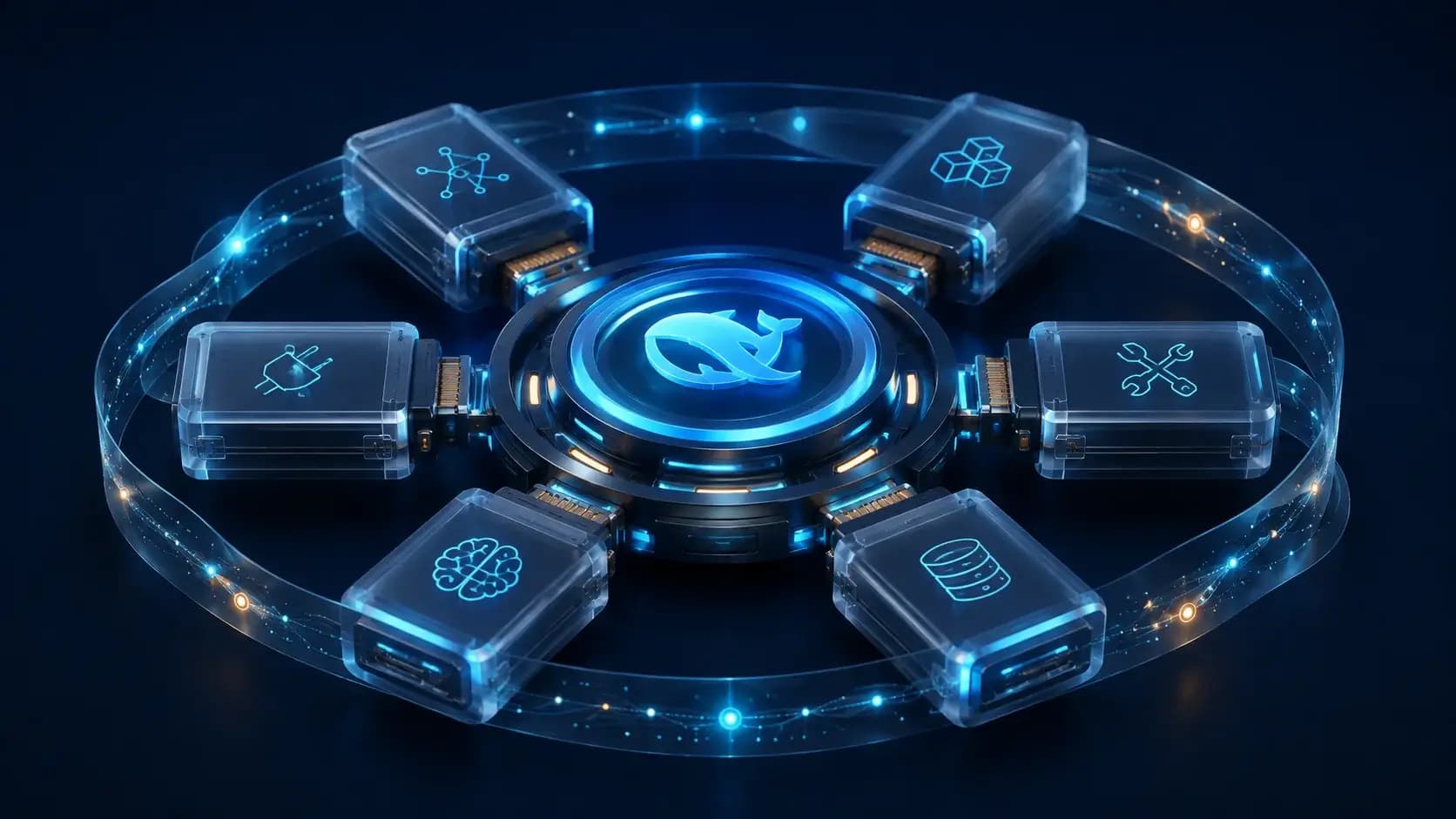
DeepSeek Harness (dsh) is an open-source agent harness from DeepSeek AI. Its README describes an architecture where everything is a plugin, powered by Cordis, so model adapters, tools, persistence, and the agent loop can be composed and replaced.
This is a developer preview, not a frozen compatibility contract. The repository explicitly warns that breaking changes will happen, so pin a commit or release when you evaluate it and keep your experiments isolated from production automation.
How the pieces fit
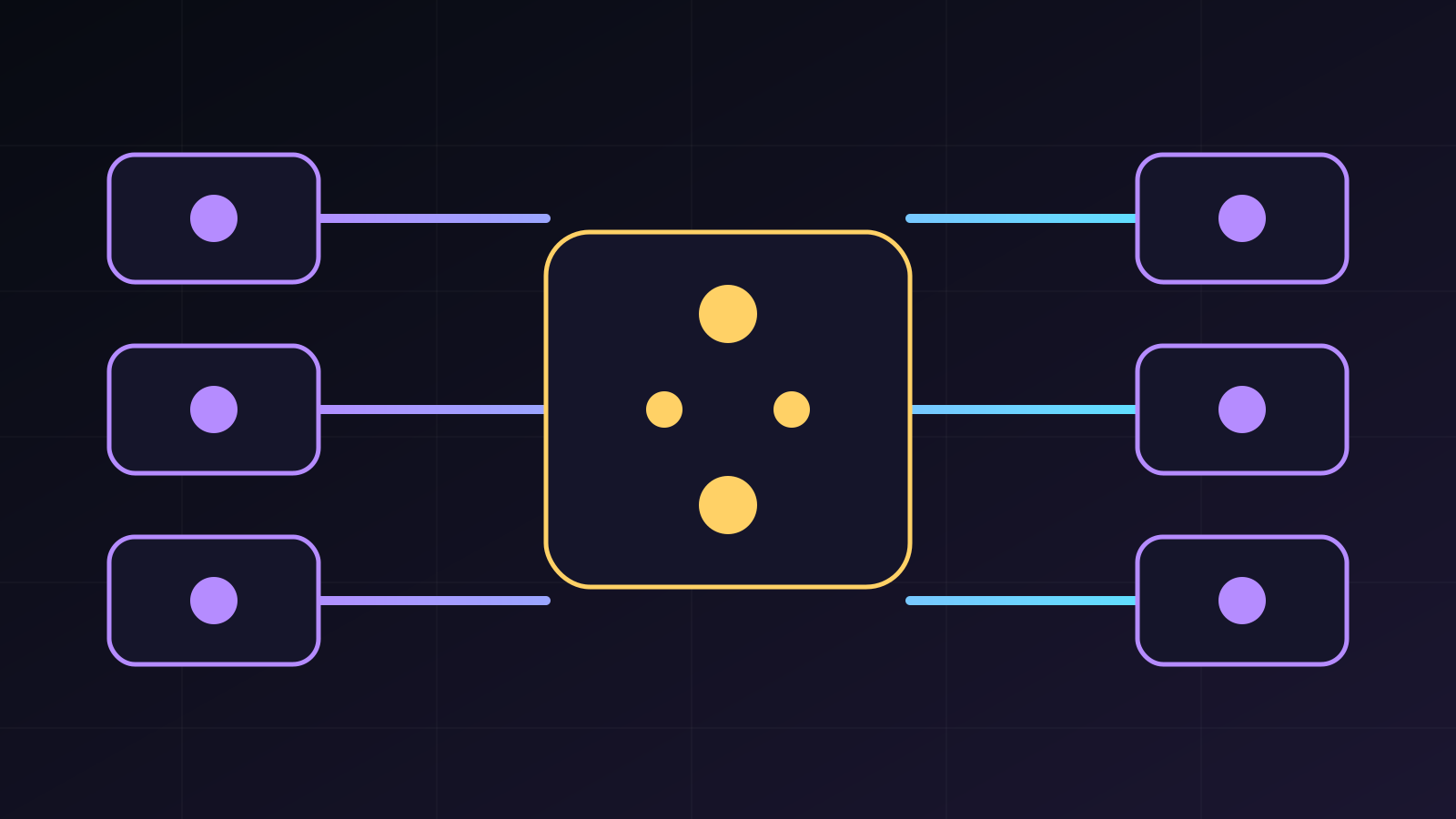
A profile is a named composition stored in the Harness home. It lists bundles and keeps user patches; the shipped web and headless profiles are templates. A bundle is a distribution format for Cordis configuration rows and the code that mounts them.
The architecture guide lists the core spine: sessions, system-prompt assembly, tools, agents, and the concrete agent loop. Extension packages depend on service definitions rather than concrete providers, which is what keeps the driver swappable.
When it is useful
Use dsh when you need a runnable agent surface with a Web UI, headless mode, plugins, workspaces, and explicit approval boundaries. It is a strong learning target for engineers who want to inspect how an agent runtime is assembled rather than only call a hosted API.
Do not treat the repository as a drop-in evaluation benchmark or a guaranteed production platform. The current README and development guide are the authority for supported commands, Node versions, and preview limitations.
Decision guide
| Criterion | Option A | Option B |
|---|---|---|
| Best fit | Inspecting and composing an agent runtime | A tiny script that only needs one model call |
| Operational posture | Pin versions and inspect preview changes | Prefer a stable API contract with fewer moving parts |
Implementation steps
- 1
Read the README and architecture guide together before changing packages.
- 2
Map a feature to its service definition, provider, and consumer package.
- 3
Choose web or headless profile based on whether a server is needed.
- 4
Record the commit, Node version, and command used for every experiment.
Copy-ready example
profile -> bundles -> cordis.patch.yml -> plugin tree
                                   |
                                   +-> sessions / tools / agent loop / model adapter
Frequently asked questions
Is DeepSeek Harness production-stable?
The repository labels it a developer preview and warns about compatibility-breaking changes. Treat it as preview software and pin the version you test.
What does 'everything is a plugin' mean?
The runtime composes services, events, adapters, and the agent loop as Cordis plugins instead of putting every capability in one privileged core.
Sources
- DeepSeek Harness READMESource checked 2026-08-27
- DeepSeek Harness architecture guideSource checked 2026-08-27