Latest article
Inside DeerFlow’s middleware: order, context and execution policy
Trace the lead-agent assembly and explain why middleware order and capability-dependent branches matter more than a fixed component count.
Nine source-grounded DeerFlow chapters: a checked first task, deployment, middleware, loop fingerprints, cost, security and a proposed quality observatory.
Latest article
Trace the lead-agent assembly and explain why middleware order and capability-dependent branches matter more than a fixed component count.
By publication date
01 → 09
Trace the lead-agent assembly and explain why middleware order and capability-dependent branches matter more than a fixed component count.
Compare a long-running agent harness with a single model call and deterministic orchestration using the same task and acceptance contract.
Read the production Compose topology, credential mounts and worker-local execution limits before exposing a DeerFlow instance.
Prepare the documented local prerequisites, select restrictive execution settings and evaluate a report without granting unnecessary external capabilities.
Design a proposed evaluation project that connects stop reasons, artifacts and human acceptance without collecting sensitive prompts or inventing upstream roadmap commitments.
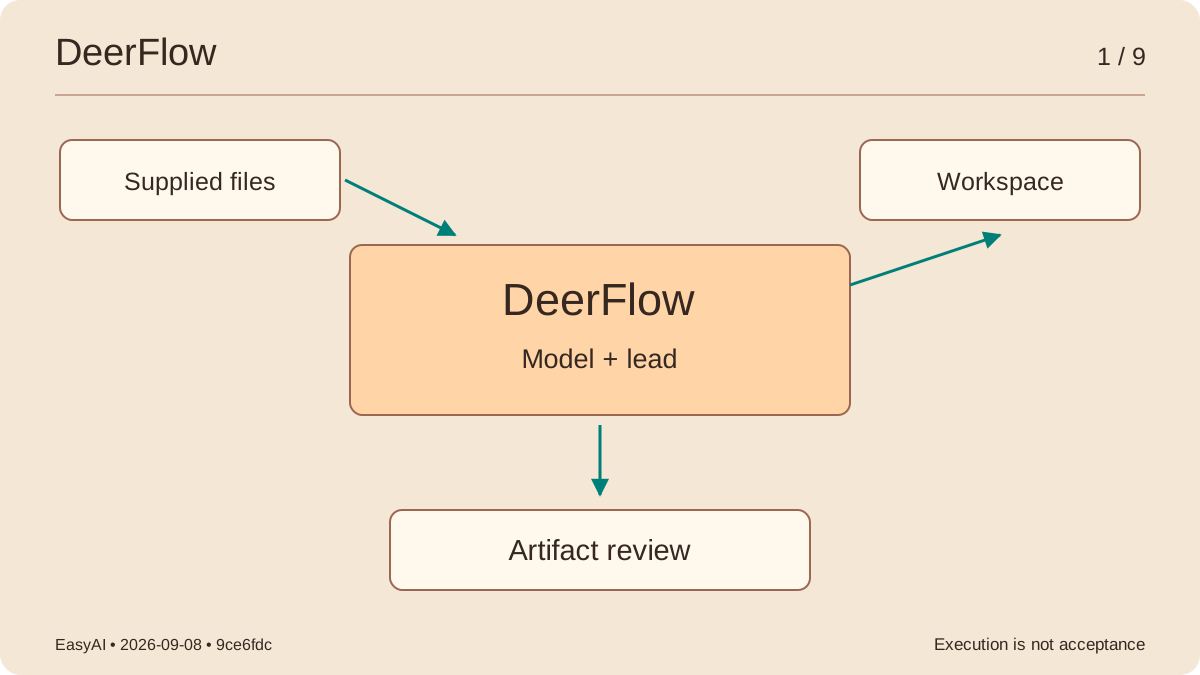
Understand DeerFlow’s lead agent, skills, memory, tools and sandbox boundaries before treating a fluent answer as a completed task.
Design a workload experiment around token use, tool bursts, stop reasons and accepted artifacts instead of claiming unmeasured agent speedups.
Understand the paired authentication and CSRF implementation, trusted proxy requirements and operational limits that survive a successful login.
Walk through the inspected Python helpers, 200-line read buckets, order-independent fingerprints and the distinction between FIFO-style storage and LRU.