
MiniMind
MiniMind Explained: Train a Small Language Model from Scratch
A source-backed MiniMind overview covering its 64M model, native PyTorch training stages, inference options, and reproducible learning path.
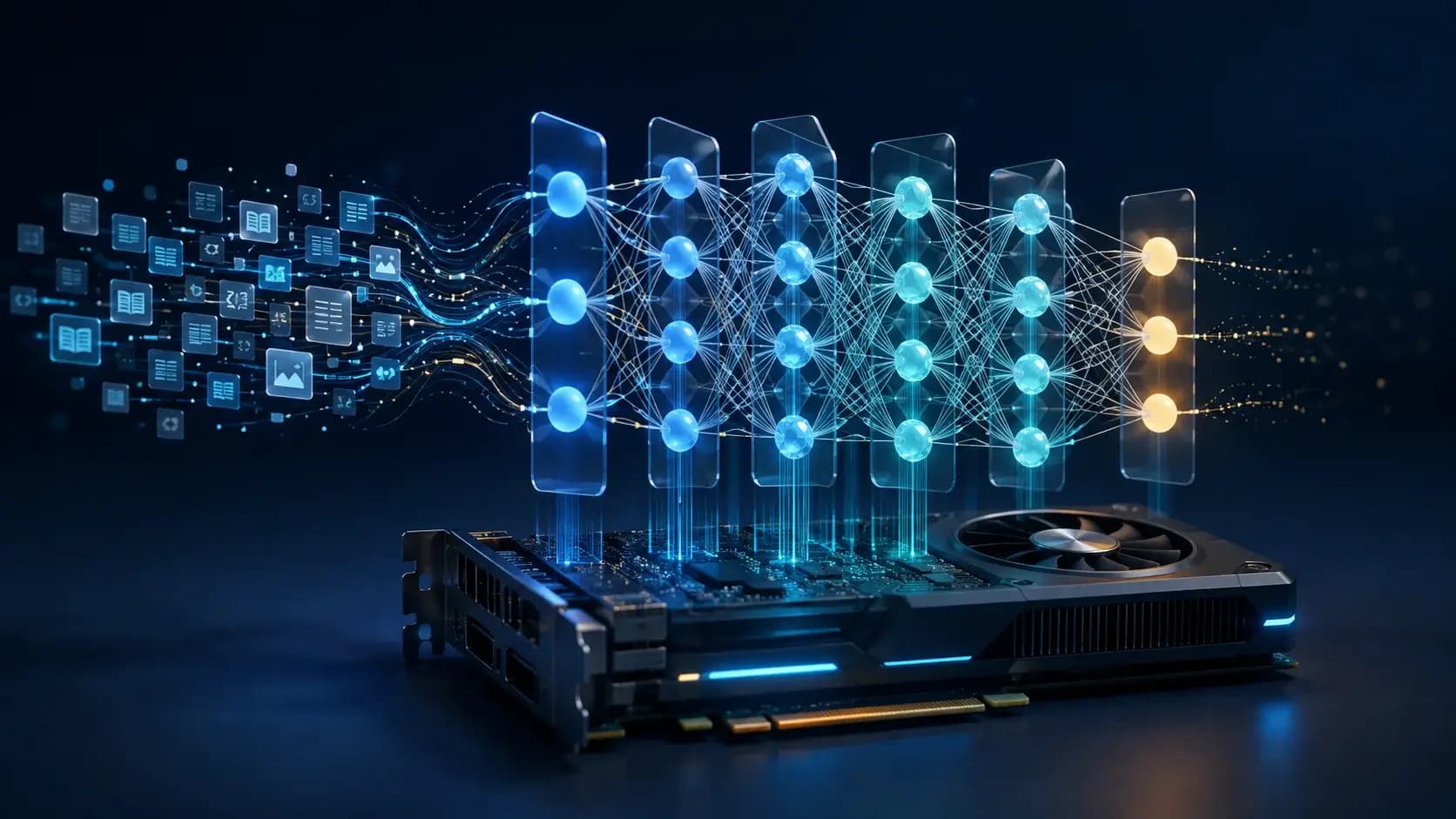

What you will learn
- Map MiniMind’s tokenizer, training, and serving stages
- Run a small reproducible PyTorch experiment
- Interpret cost, evaluation, and production limitations
Before you start
- Basic Git and command-line usage
- Comfort reading a project README
You can explain the project, run its documented first step, and decide what to verify before adopting it.
Key takeaways
- MiniMind exposes an end-to-end small-LLM training path in native PyTorch.
- Its cost and time claims are hardware- and stage-specific measurements, not universal guarantees.
- Start with inference and a one-process experiment before scaling training or serving.
The short answer
MiniMind is an educational open-source project that trains a very small language model from scratch. Its README describes a main model around 64M parameters, a low-cost single-GPU learning path, and a complete chain covering tokenizer training, pretraining, supervised fine-tuning, LoRA, DPO, PPO/GRPO/CISPO, tool use, agentic reinforcement learning, adaptive thinking, and distillation.
The project’s value is transparency rather than leaderboard scale. Core algorithms are implemented with native PyTorch instead of hiding the important steps behind high-level training frameworks, while the repository still documents compatibility with transformers, trl, peft, llama.cpp, vLLM, Ollama, and common chat UIs. That makes it a useful bridge between reading a paper and tracing executable code.
A reproducible learning path
The README starts with a Python environment and a requirements file, then separates inference demos from training. A beginner can first place a released model in the documented scripts directory and run the Streamlit `web_demo.py`; only after the inference path is understood should they move to pretraining or full SFT.
The training stages are explicit: pretraining learns next-token structure, SFT teaches instruction and conversation behavior, and later scripts demonstrate preference optimization, reinforcement learning, tool calls, and distillation. The project also warns that the headline ‘two hours’ and ‘three yuan’ refer to a specific SFT measurement on one NVIDIA 3090 and should not be generalized to every dataset, GPU, or training stage.
Run the smallest experiment
The repository documents `python>=3.10` for the Streamlit demo, `pip install -r requirements.txt`, and commands such as `torchrun --nproc_per_node 1 train_pretrain.py` or `torchrun --nproc_per_node 1 train_full_sft.py`. Use one process and the smallest dataset first; this verifies paths, tokenizer files, checkpoint naming, and CUDA availability before any expensive run.
For serving, the README documents `scripts/serve_openai_api.py` as a lightweight OpenAI-compatible endpoint and `scripts/web_demo.py` as a Streamlit UI. Preserve the model revision, data file, command line, GPU type, and evaluation set so a later reader can distinguish a code change from a training variance.
When MiniMind is a good fit
MiniMind is ideal for developers learning how a language model is assembled, researchers prototyping a training idea on a small scale, and educators who need a codebase where tokenizer, attention, loss, checkpointing, and post-training stages can be inspected. Its small footprint makes iteration practical on personal hardware.
It is not a drop-in replacement for a frontier model or a guarantee that a tiny checkpoint is safe for production. Validate data licensing, prompt behavior, tool permissions, evaluation quality, and serving limits independently. The right outcome is a reproducible experiment and a clear understanding of trade-offs, not an inflated claim based on one short training run.
Decision guide
| Criterion | Option A | Option B |
|---|---|---|
| Best when | You need predictable behavior and easy auditing | You need adaptive optimization and have reliable telemetry |
| Main risk | May leave performance on the table | Can become difficult to explain or debug |
Implementation steps
- 1
Create a Python environment and install the pinned requirements.
- 2
Run the Streamlit demo with a released checkpoint to verify inference.
- 3
Train a tiny pretrain or SFT run with one process and record all inputs.
- 4
Evaluate, inspect checkpoints, and only then try LoRA, RL, tool use, or serving.
Copy-ready example
python -m venv .venv
. .venv/bin/activate
pip install -r requirements.txt
# from the documented trainer directory:
torchrun --nproc_per_node 1 train_pretrain.py
torchrun --nproc_per_node 1 train_full_sft.py
Frequently asked questions
Can MiniMind be trained on any GPU in two hours?
No. The README qualifies the two-hour figure as a measured SFT run for one epoch on a single NVIDIA 3090 with a particular setup. Treat it as a reference point, not a promise.
Does MiniMind support OpenAI-compatible serving?
The README documents `scripts/serve_openai_api.py` as a lightweight OpenAI-compatible service; verify the endpoint and model path for the revision you run.
Sources
- MiniMind README (captured 2026-08-31)Source checked 2026-08-31
- MiniMind repositorySource checked 2026-08-31