
WandEnhancer
WandEnhancer Explained: Local Client Patching, Remote Panel, and Safety Boundaries
A source-backed WandEnhancer overview covering its local patcher, LAN web panel, custom scripts, build workflow, and malware-safety warnings.

What you will learn
- Explain the local patcher and LAN panel trust boundaries
- Build the project from a controlled fork
- Identify supply-chain and script-privilege risks
Before you start
- Basic Git and command-line usage
- Comfort reading a project README
You can explain the project, run its documented first step, and decide what to verify before adopting it.
Key takeaways
- WandEnhancer is a local client patcher with an optional LAN control panel.
- The project does not publish official binaries and warns about malicious third-party downloads.
- Port 3223 has no pairing code, so keep the panel on a trusted LAN or VPN.
The short answer
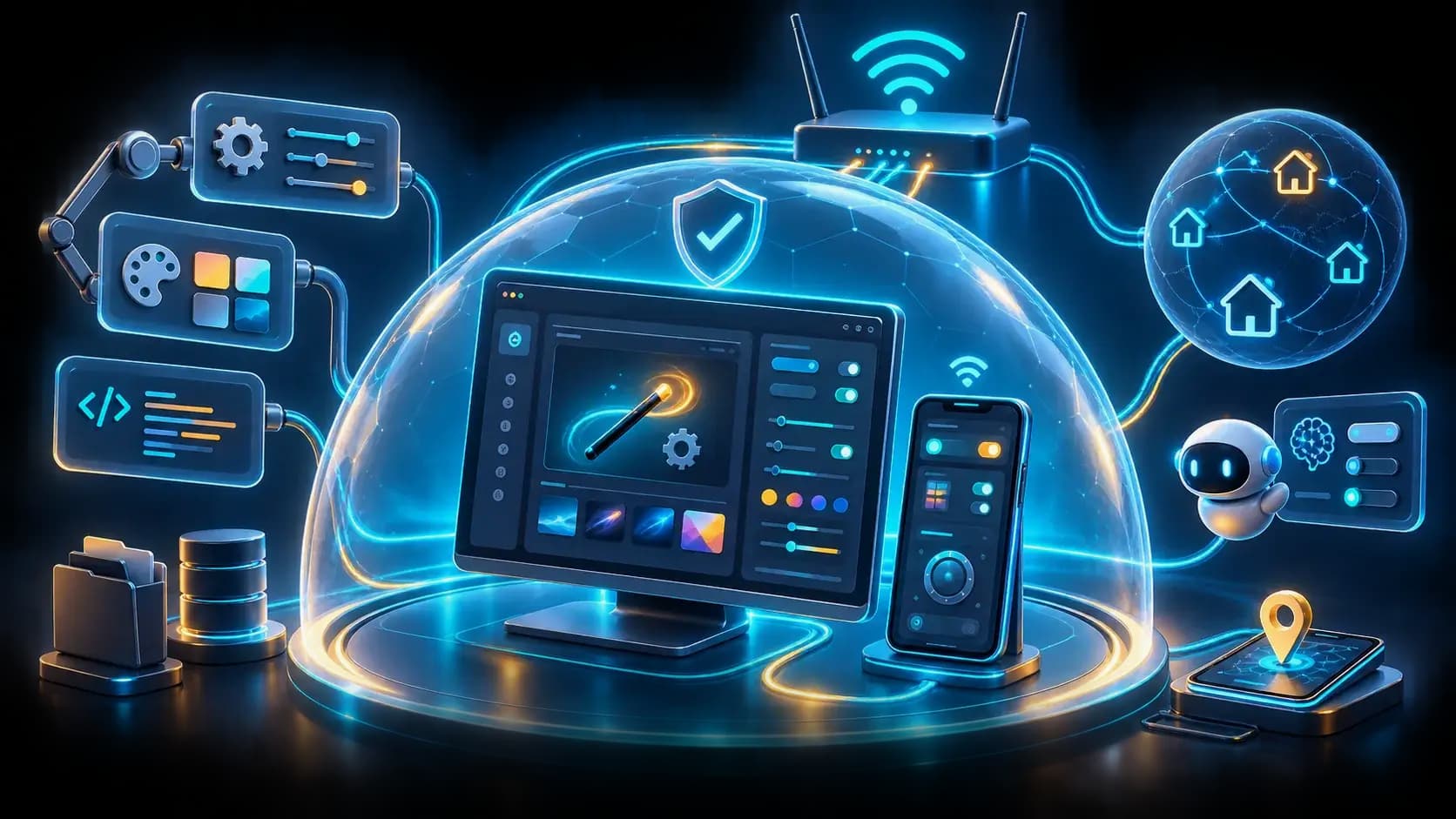
WandEnhancer is an open-source interoperability tool for extending local client-side configuration and improving the UX of the Wand application. Its README describes a .NET patcher, compatibility adjustments for new client versions, layout and theme customization, AI features, and an optional Remote Web Panel for controlling features from a phone on the same network.
This is a security-sensitive project to understand before installing. The README explicitly says there are no official prebuilt executables or YouTube tutorials and warns about fake downloads containing malware or password stealers. The safest interpretation is to review the source and build an artifact from your own fork rather than trusting an unsigned binary from a third-party mirror.
What runs locally
The documented patching path modifies files in the selected local Wand installation. The bundled `version.dll` proxy is loaded by Wand and changes an Electron ASAR-integrity fuse byte inside Wand’s own process; the README says it does not inject into another process and does not contact an update or telemetry service. Those are project claims to verify against the exact commit you build.
The optional Remote Web Panel is a different trust boundary. It starts a plain HTTP server on LAN port 3223, uses Wand API/CDN data, and has no pairing code. Anyone who can reach that port can view the panel and control the active trainer, so the README recommends a trusted LAN or VPN and explicitly says not to expose the port directly to the internet.
Build and use it safely
The supported distribution workflow is to fork the repository, sync the fork, enable GitHub Actions, run the `Build executable` workflow, and download the resulting artifact from your own run. Building from source requires CMake, Node.js, pnpm, Visual Studio 2022 with the Desktop development with C++ workload, MSBuild, and .NET Framework 4.8 targeting tools; `build.cmd` orchestrates the web panel, native helper, NuGet restore, and WPF build.
Custom JavaScript files can be injected into the Wand renderer when the Remote Web Panel patch is enabled. The README notes that injected scripts have DOM access and Node `require`, may run more than once per launch, and run with the same privileges as the client. Guard one-time work, review every script, and never copy a script you cannot explain.
When it is a good fit
WandEnhancer is relevant when a user needs local UI customization, compatibility adjustments, or a controlled phone-based panel for a desktop application. It is not a generic remote-control service, and its LAN panel should not be treated as an internet-facing admin endpoint.
For an evaluation, pin the repository revision, build your own artifact, compare the workflow logs with the source, keep the panel on a private network, and remove the patch if the client behaves unexpectedly. The project’s most useful lesson is the separation between local patching, optional LAN control, and the supply-chain risk of unsigned builds.
Decision guide
| Criterion | Option A | Option B |
|---|---|---|
| Best when | You need predictable behavior and easy auditing | You need adaptive optimization and have reliable telemetry |
| Main risk | May leave performance on the table | Can become difficult to explain or debug |
Implementation steps
- 1
Fork and sync the repository before building.
- 2
Run the documented GitHub Actions Build executable workflow or install the listed Windows build tools.
- 3
Review the artifact and source before running a self-built executable.
- 4
If enabling the panel or custom scripts, restrict network reachability and audit privileges.
Copy-ready example
Fork -> Sync fork -> Actions -> Build executable -> download your artifact
Remote panel: trusted LAN only, TCP 3223, never expose directly to the internet
Frequently asked questions
Where is the official WandEnhancer executable download?
The README says the project does not publish prebuilt executables. Build from your own fork’s GitHub Actions artifact and treat third-party binaries as untrusted.
Can I expose the Remote Web Panel through a public reverse proxy?
The README says the panel has no pairing code and anyone who reaches port 3223 can control the active trainer. Keep it on a trusted LAN or VPN instead.
Sources
- WandEnhancer README (captured 2026-08-31)Source checked 2026-08-31
- WandEnhancer repositorySource checked 2026-08-31