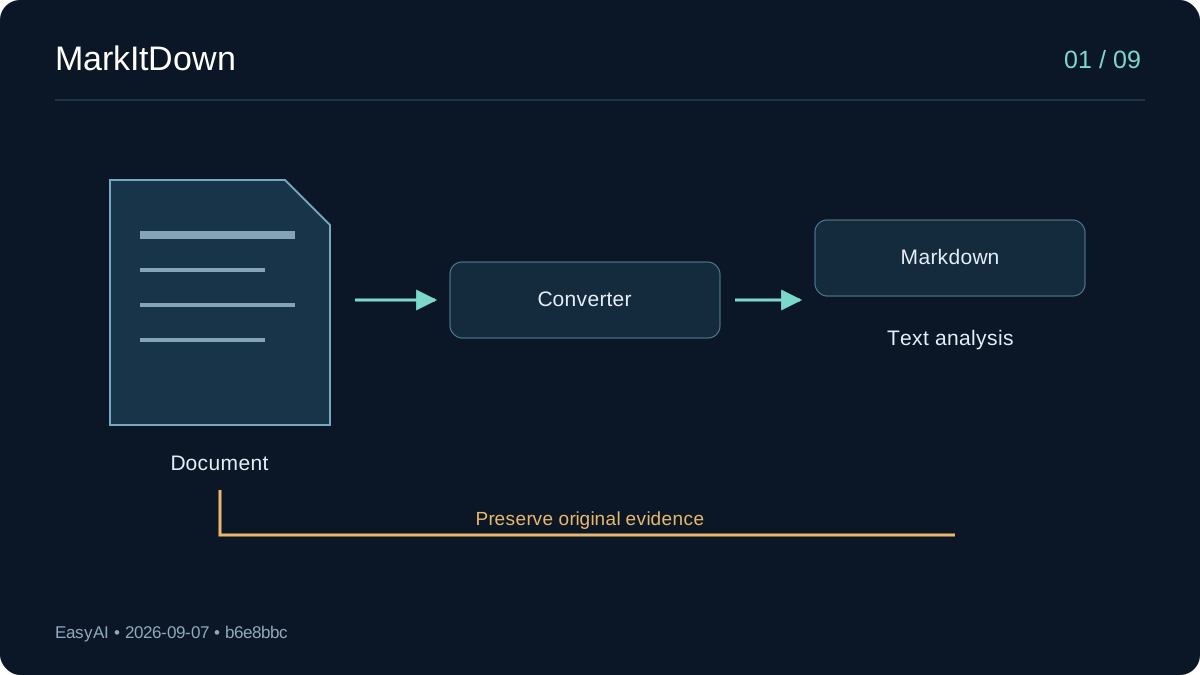
Follow the inspected MarkItDown source from local input through StreamInfo guesses, prioritized converters, Markdown normalization and explicit failure classes.
MarkItDown architecture: streams, format hints and converter selectionMarkItDownMarkdown
Follow the inspected MarkItDown source from local input through StreamInfo guesses, prioritized converters, Markdown normalization and explicit failure classes.
MarkItDown architecture: streams, format hints and converter selectionMarkItDownMarkdown
Compare document conversion approaches by text extraction, visual fidelity, optional services and corpus-level acceptance rather than an unsupported feature ranking.
Choose MarkItDown, OCR or a layout-preserving converterMarkItDownMarkdown
Design a conversion worker around local inputs, selected extras, resource limits and durable outputs; distinguish this deployment design from the upstream library.
Deploy MarkItDown as a bounded document conversion workerMarkItDownMarkdown
Design a small ingestion project that stores original files, conversion options, expected facts and review decisions, with a clear separation between current code and proposed extensions.
Build a MarkItDown ingestion lab with explainable quality checksMarkItDownMarkdown
Build a per-format conversion benchmark, account for buffering and optional services, and report accepted documents instead of raw conversion throughput.
Measure MarkItDown performance without hiding extraction failuresMarkItDownMarkdown
Inspect the core and PlainTextConverter at a fixed commit to understand acceptance, charset handling, stream restoration and a focused plugin regression test.
MarkItDown source walkthrough: trace a UTF-8 text conversionMarkItDownMarkdown