← Back to open sourceFeatured starting point
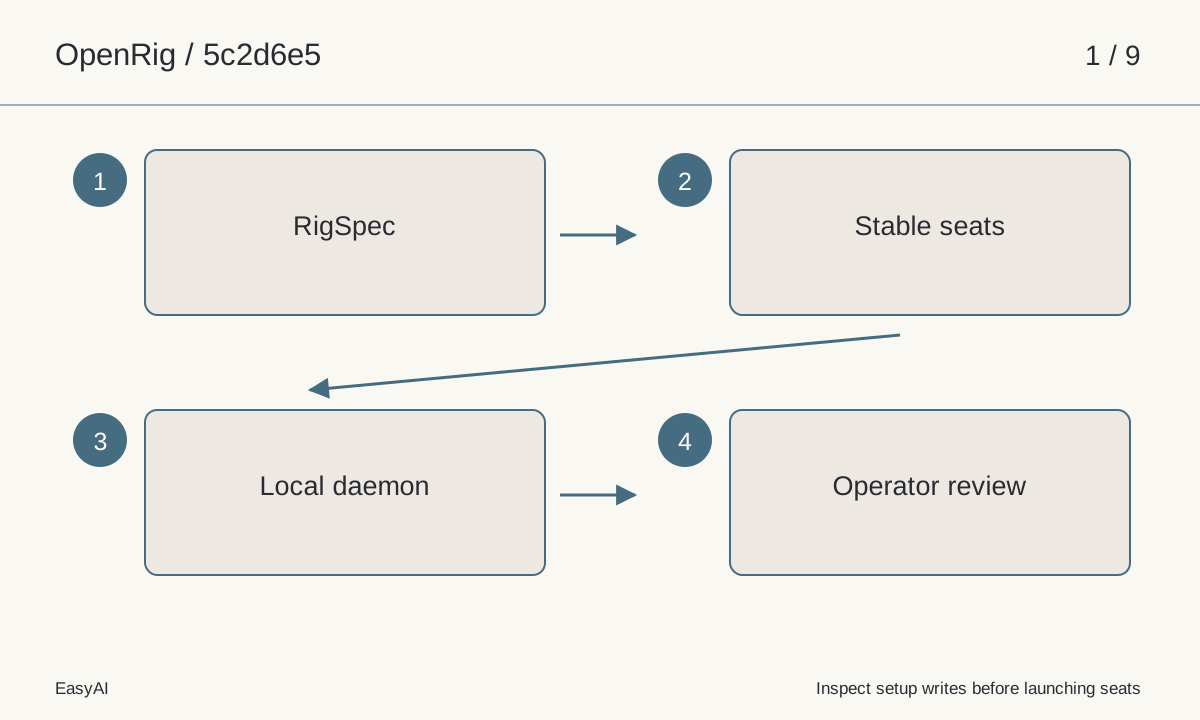
Understand rigs, seats and the local daemon before adding a second agent
OpenRig explained: coordinate coding agents without losing the operatorOpenRigmvschwarz/openrig
Start reading →Suggested learning path
01 → 09
01·3 min read·Search intent: Learning
Understand rigs, seats and the local daemon before adding a second agent
OpenRig explained: coordinate coding agents without losing the operatorOpenRigmvschwarz/openrig
·3 min read·Search intent: Learning
Prepare one selected provider and see what startup will change
OpenRig quickstart: preview before `rig up`OpenRigmvschwarz/openrig
·3 min read·Search intent: Learning
Plan a controlled workstation or shared-host rollout before starting seats
Deploying OpenRig: separate instance state from provider stateOpenRigmvschwarz/openrig
·3 min read·Search intent: Learning
Trace declarations, daemon state, tmux sessions and runtime adapters
OpenRig architecture: from a RigSpec to live agent seatsOpenRigmvschwarz/openrig
·3 min read·Search intent: Learning
Use three CLI entry points to separate launch, communication and task ownership
Reading OpenRig source: `up`, `send` and the work queueOpenRigmvschwarz/openrig
·3 min read·Search intent: Learning
Measure coordination overhead without inventing model-speed numbers
OpenRig performance and cost: count seats, context and operator timeOpenRigmvschwarz/openrig
·3 min read·Search intent: Learning
Audit machine writes and agent permissions before using a real repository
OpenRig security operations: hooks, trust and workload scopeOpenRigmvschwarz/openrig
·3 min read·Search intent: Learning
Compare coordination benefit with added state, permissions and provider cost
Choosing OpenRig: when a team of agents beats one careful sessionOpenRigmvschwarz/openrig
·3 min read·Search intent: Learning
Turn the first owner/checker run into evidence for a safe rollout decision
OpenRig next steps: a measured pilot, not a bigger team by defaultOpenRigmvschwarz/openrig