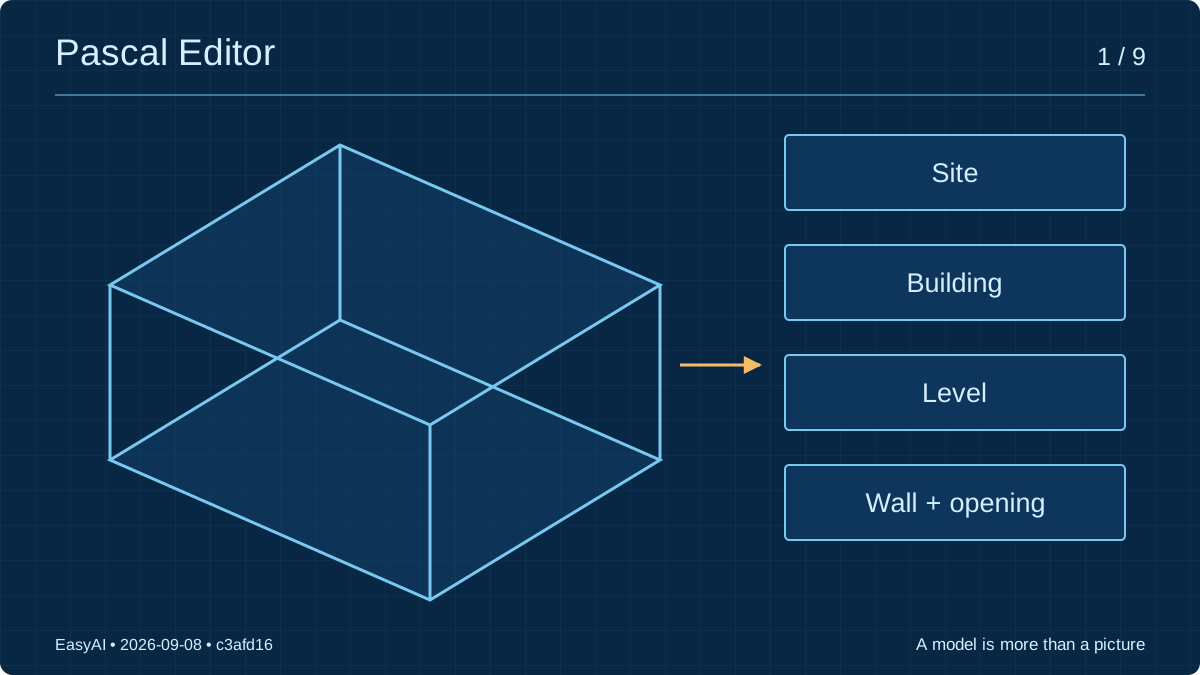
Nine Pascal Editor guides grounded in source: building data, first project, local deployment, scene repair, GPU fallback, persistence and permission boundaries.
Compare spatial workflows by editing, persistence, plugin availability and graphics acceptance rather than assuming every Three.js application solves the same problem.
Choosing Pascal: complete editor, embedded viewer or a custom scene pipelinePascal EditorWebGPU
Choose the local CLI or embedded-package path, load required node definitions and verify a small building scene without mistaking an empty canvas for success.
Your first Pascal project: create, inspect, save and reopenPascal EditorWebGPU
Design a proposed lab that shows before/after graph repairs, GPU fallback and stale-write decisions with purposeful diagrams and optional spatial interaction.
A Pascal learning project: an explainable scene-repair and version labPascal EditorWebGPU
Inspect HTTP guards, origin handling, request limits and versioned writes without confusing transport authentication with tenant isolation or safe geometry.
Pascal MCP security: loopback, shared token and scene-write boundariesPascal EditorWebGPU