Nine source-backed lessons on named local URLs, framework launchers, proxy architecture and safe operation, with a 24-case loopback experiment and original diagrams.
Compare Portless with manually assigned ports, a team-managed reverse proxy and sharing tools through requirements rather than invented product rankings.
Choosing Portless: when named development routes justify another local componentPortlessvercel-labs/portless
Plan a repeatable local-development rollout with explicit proxy settings, Node.js compatibility, certificate ownership and reversible service decisions.
Deploying Portless in a team means managing local state, trust and startupPortlessvercel-labs/portless
Design a proposed teaching tool that explains matching priority, browser origins and exposure boundaries without silently configuring certificates or sharing apps.
A Portless learning project: a read-only route and origin explorerPortlessvercel-labs/portless
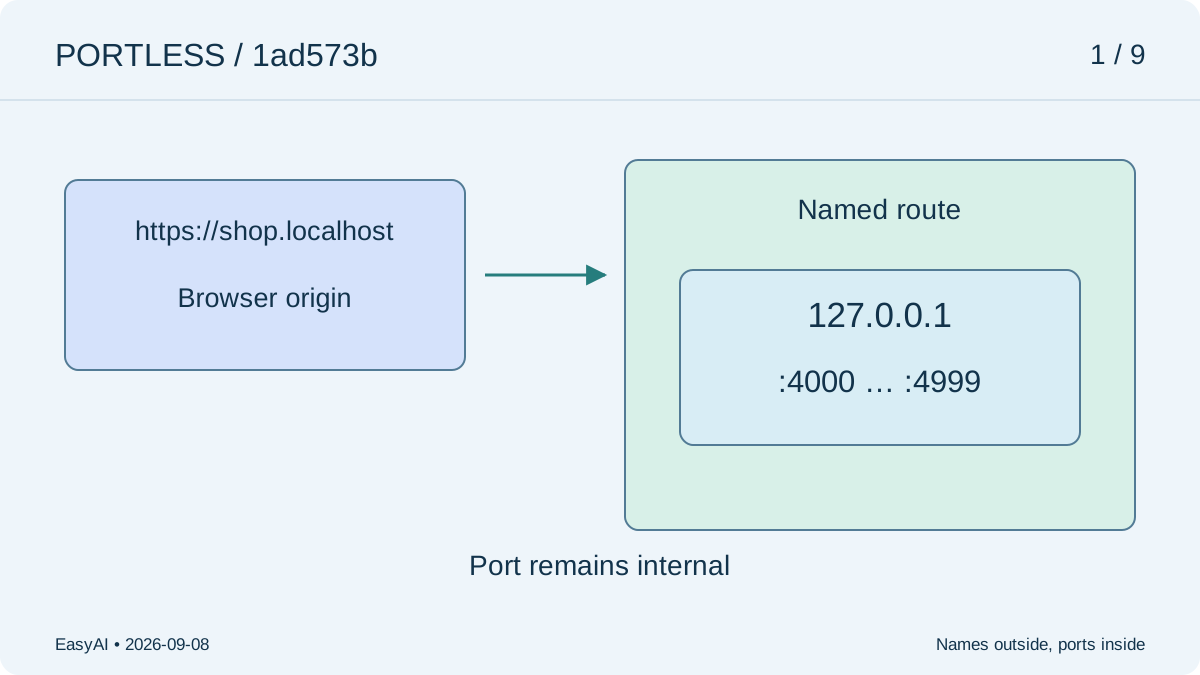
Learn how Portless names development applications, what still listens on a port, and why local HTTPS, branch names and public sharing are separate decisions.
Portless explained: stable local URLs without pretending ports disappearPortlessvercel-labs/portless
Understand local and public exposure, why forwarded headers are not trusted identity, and how the pinned internal hosts-sync endpoint authenticates requests.
Portless security boundaries: loopback, forwarding headers and hosts-sync authorizationPortlessvercel-labs/portless
Reproduce Portless routing priorities with fixed source and distinguish an exact Tailscale authority from hostname fallback and optional wildcard matching.
Reading Portless route matching: exact names, authorities and first suffix winsPortlessvercel-labs/portless