
Model Economics
Token-Based Billing for AI APIs: Ledger Design and Budget Controls
Design a token-based billing system that keeps customer credits, provider usage, retries, refunds, and reconciliation explainable.

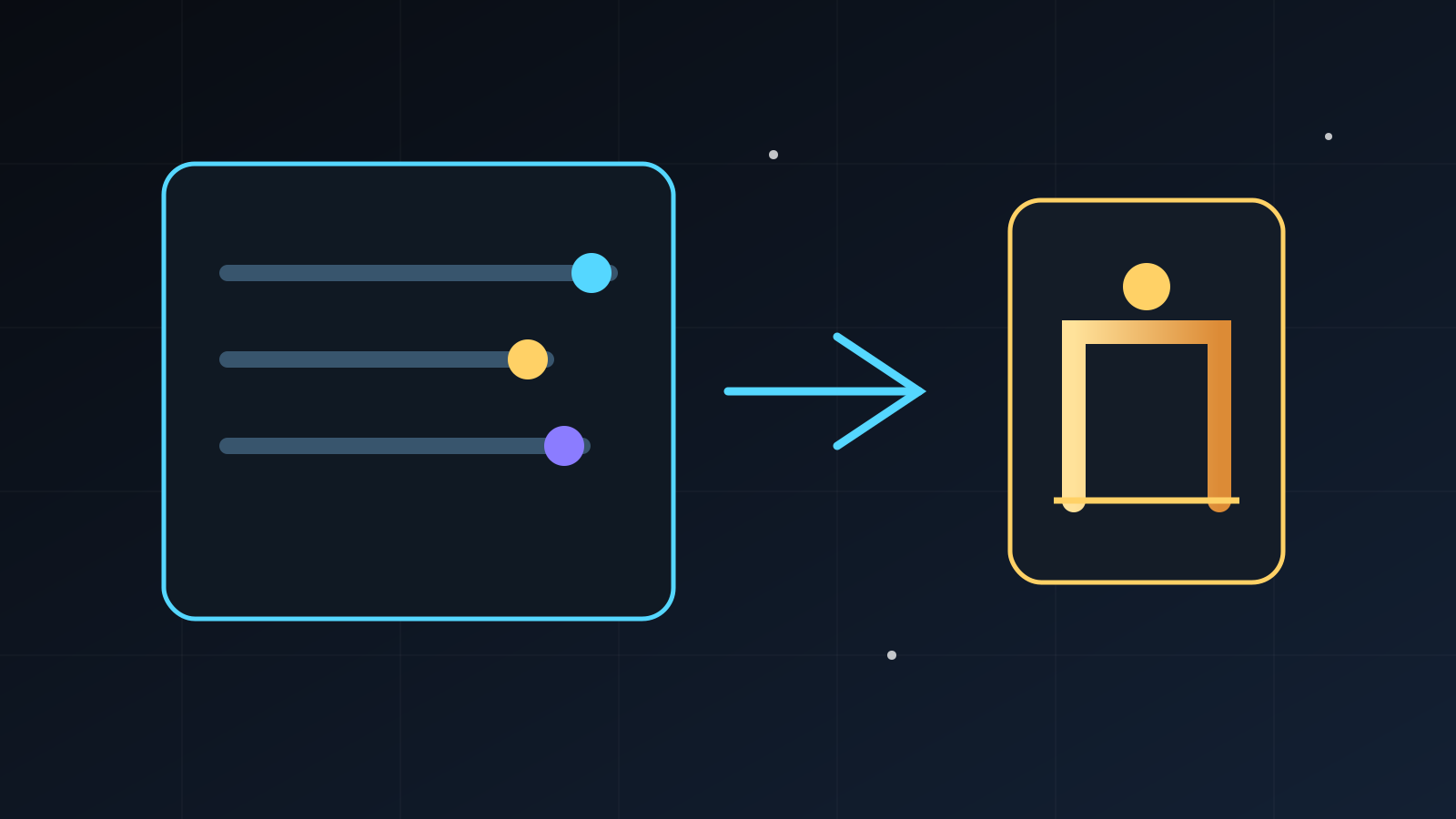
What you will learn
- Name the billing unit and keep immutable ledger entries.
- Use reservation and settlement for long or streaming requests.
- Make every debit traceable and idempotent.
Before you start
- Basic HTTP and API knowledge
Leave with a concrete implementation checklist and a testable starting point.
Key takeaways
- Name the billing unit and keep immutable ledger entries.
- Use reservation and settlement for long or streaming requests.
- Make every debit traceable and idempotent.
Define the unit
Token-based billing needs an explicit unit: input tokens, output tokens, cached tokens, generated items, or a currency wallet. Name the unit in product copy and API responses so customers can predict what a debit means.
A single mutable balance is not enough evidence. Keep immutable ledger entries for grants, reservations, debits, refunds, and adjustments.
Reserve, settle, and release
For a long or streaming request, reserve an upper bound, settle against measured usage, and release the unused portion. If the request fails before the provider accepts it, compensate the reservation instead of silently charging.
Idempotency keys are required for both payment webhooks and usage debits. Retries must not create duplicate charges.
Make disputes answerable
Store model ID, endpoint, token counts, rate snapshot, exchange-rate source, request ID, and ledger entry on every debit. Support should be able to trace a customer invoice to an API response.
Run daily reconciliation against provider invoices and alert on negative balances, unlinked debits, duplicate events, and unexplained rate changes.
Decision guide
| Criterion | Option A | Option B |
|---|---|---|
| Best when | You need predictable behavior and easy auditing | You need adaptive optimization and have reliable telemetry |
| Main risk | May leave performance on the table | Can become difficult to explain or debug |
Implementation steps
- 1
Choose the customer-facing unit.
- 2
Implement reserve and settle entries.
- 3
Attach idempotency and trace IDs.
- 4
Reconcile usage, payments, and provider invoices daily.
Copy-ready example
await ledger.reserve({ requestId, maxTokens });
const usage = await providerResult.usage;
await ledger.settle({ requestId, inputTokens: usage.input_tokens, outputTokens: usage.output_tokens });
Frequently asked questions
Should customers be charged before a response exists?
You can reserve before execution, but settle against measured usage and release or compensate unused value when the request is rejected or fails safely.
Sources
- Ahrefs Keywords ExplorerSource checked 2026-08-27
- EasyAI pricing referenceSource checked 2026-08-27