
ECC
ECC: futuro y proyecto de un harness de agentes auditable entre clientes
Una hoja de ruta para manifiestos de capacidades, trazas de eventos, límites de memoria, paridad de adaptadores y rollback seguro.

Qué aprenderás
- Design a cross-client capability manifest
- Build a redacted conformance trace
- Plan reversible harness adoption
Antes de empezar
- Basic Git and command-line usage
- Comfort reading a project README
You can explain the project, run its documented first step, and decide what to verify before adopting it.
Conclusiones clave
- Capability manifests can make cross-client parity explicit and testable.
- A conformance lab should capture redacted traces, memory, hooks, approvals, and egress.
- Adopt in trace-only and advisory modes before enforcement, with a reversible fallback.
The next layer is an explicit contract
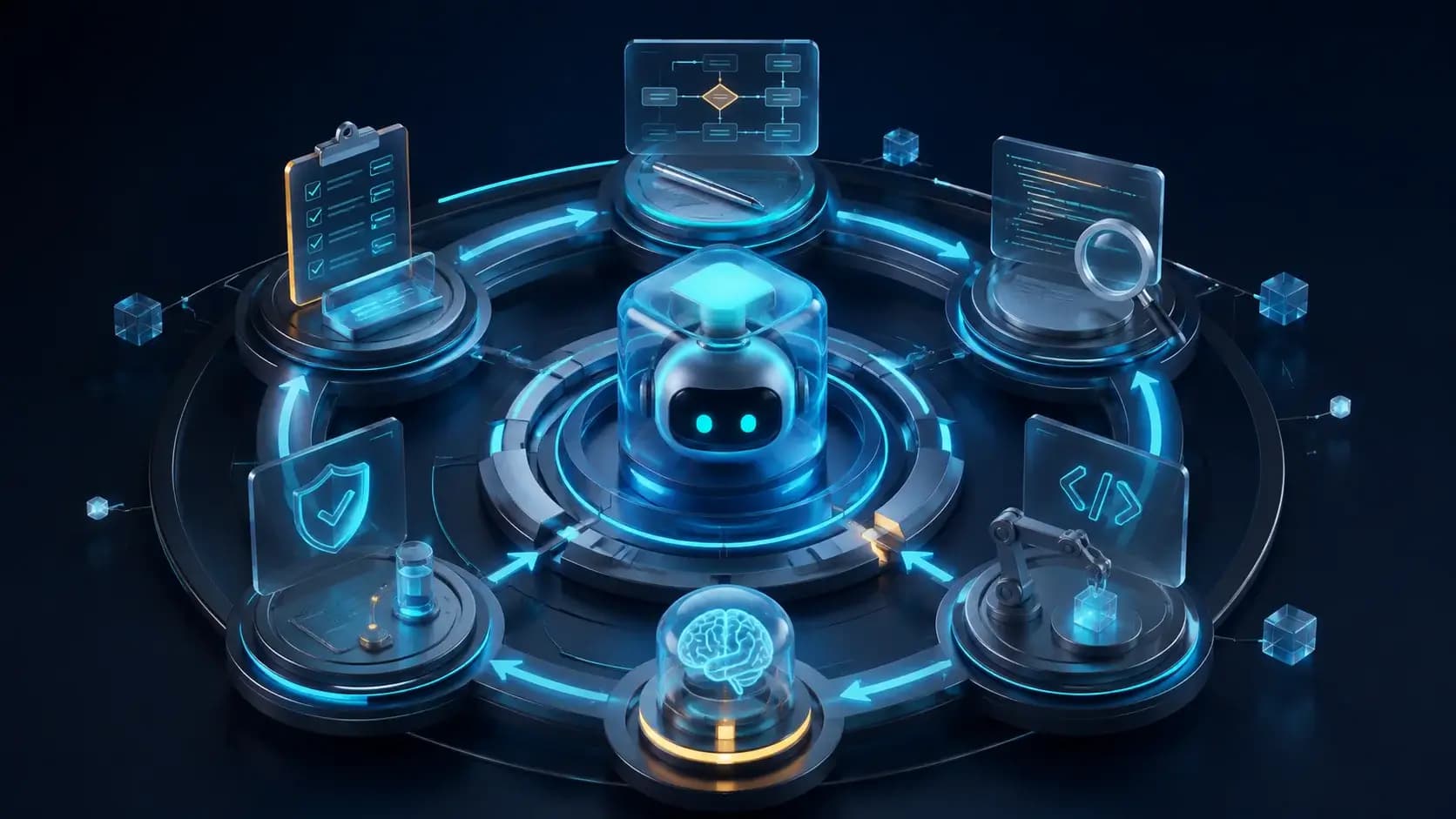
ECC puede convertir el comportamiento entre clientes en un contrato medible: un manifiesto versionado declara comandos, hooks, MCP, memoria, aprobaciones y redacción; un laboratorio compara trazas redactadas en Claude Code, Codex, Cursor y otros hosts, con adopción gradual trace-only, advisory y enforced.
The manifest should be versioned with generated files and tested like an API. A host that lacks a capability can remain useful when the gap is visible and the fallback is safe.
Capstone project: the harness conformance lab
Build a conformance lab that runs one harmless repository task through ECC adapters. Capture the plan, tool calls, hook events, approval decisions, MCP endpoints, generated files, memory writes, tests, and final diff in a redacted trace.
Compare traces across Claude Code, Codex, Cursor, OpenCode, and another supported host. The lab should flag duplicate hooks, missing approvals, unexpected egress, context growth, and memory leakage before a team upgrades its default harness.
Research questions
Explore event schemas that can be shared across hosts, policy-as-code for destructive commands, scoped memory with expiry, and signed skill manifests. Measure accepted-change quality, review time, token overhead, hook latency, and blocked-command explainability.
Keep model choice separate from harness behavior. A better model can hide a policy regression, so replay the same prompts and fixtures with the same approval boundary.
A reversible adoption path
Start with trace-only mode, then add advisory checks, then enforce approvals and redaction for a small team. Keep a manual checklist and native-client fallback available, and make uninstall remove every generated surface.
The long-term opportunity is an open conformance suite that lets teams choose an agent harness based on evidence, safety, and operating cost rather than a feature-count checklist.
Cómo elegir
| Criterio | Opción A | Opción B |
|---|---|---|
| Best when | You need predictable behavior and easy auditing | You need adaptive optimization and have reliable telemetry |
| Main risk | May leave performance on the table | Can become difficult to explain or debug |
Pasos de implementación
- 1
Define a manifest for commands, hooks, MCP, memory, approvals, and redaction.
- 2
Replay one harmless task across supported clients and capture redacted traces.
- 3
Flag parity, duplicate-hook, egress, context, and memory anomalies.
- 4
Roll out trace-only → advisory → enforced modes with clean uninstall.
Ejemplo para copiar
{
  "client": "<host>",
  "ecc_revision": "<commit>",
  "capabilities": { "hooks": [], "mcp": [], "memory_scope": "project", "approvals": [] },
  "trace_sha256": "<hash>",
  "parity_status": "review"
}
Preguntas frecuentes
Is the conformance lab part of ECC today?
It is a proposed capstone project. The current repository provides the catalog and adapters; the lab would add measurable cross-client evidence.
How can a team adopt it safely?
Begin in trace-only mode, compare redacted traces, then move to advisory and enforced approvals only after parity and rollback tests pass.
Fuentes
- ECC README (captured 2026-08-31)Fuente verificada 2026-08-31
- ECC repositoryFuente verificada 2026-08-31