
Checkstyle
Checkstyle: futuro y proyecto de un observatorio de políticas Java
Diseña un proyecto para observar salud de reglas, deuda de supresiones, rendimiento y feedback sin recolectar código por defecto.

Qué aprenderás
- Design policy observability without replacing the engine
- Track rule health and migration debt
- Evaluate incremental analysis safely
Antes de empezar
- Basic Git and command-line usage
- Comfort reading a project README
You can explain the project, run its documented first step, and decide what to verify before adopting it.
Conclusiones clave
- A policy observatory can make rule ownership, noise, debt, and runtime visible.
- The capstone should preserve local reports and avoid collecting source by default.
- Incremental analysis and signed configuration are experiments gated by diagnostic parity.
From lint gate to policy observability
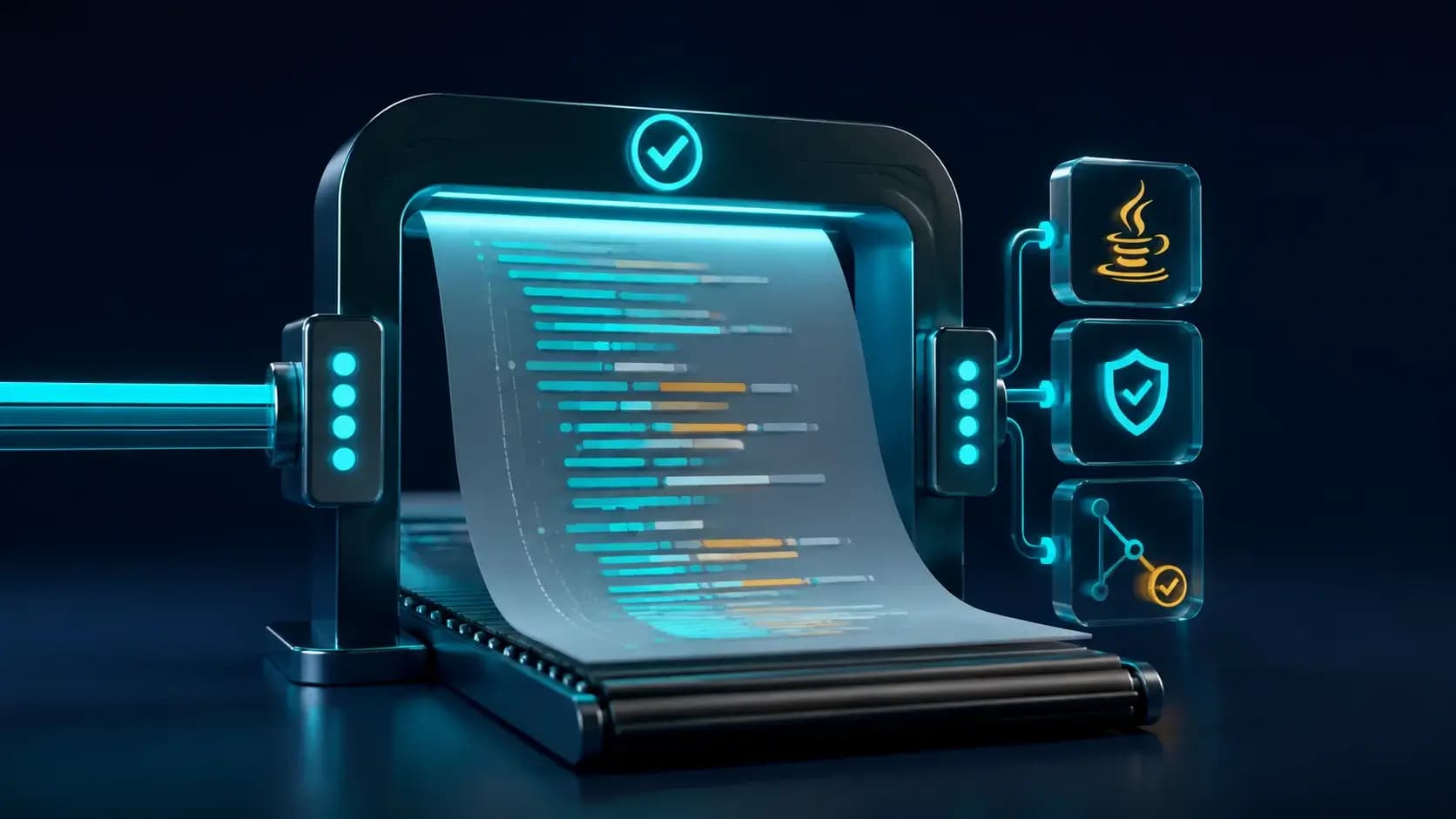
El futuro útil de Checkstyle puede ser la observabilidad de políticas: propietarios de reglas, historial de falsos positivos, presupuesto de runtime, deuda de supresiones y guía de migración. El observatorio propuesto conserva los informes locales y trata el análisis incremental y las configuraciones firmadas como experimentos sujetos a paridad.
This does not mean turning a style tool into a hosted service. It means preserving the local, reproducible engine while adding evidence that helps teams decide which rules improve code health and which create noise.
Capstone project: the policy observatory
Build a small CI collector that ingests Checkstyle reports, configuration hashes, JDK versions, file counts, runtime, and changed-file scope. Generate a dashboard showing violation trends, new-vs-baseline findings, slow checks, suppression age, and report parity between CLI and build plugins.
Keep the collector privacy-preserving: store rule IDs and locations, not full source, unless the repository policy permits it. Add an export that a maintainer can review during a rule or engine upgrade.
Experiments worth contributing
Test incremental AST processing, smarter changed-file selection, and rule-level performance instrumentation while preserving audit-event compatibility. Prototype signed configuration bundles so a CI job can prove which policy produced a report.
Evaluate ideas on representative open-source modules and publish clean, failing, generated-source, and multi-JDK fixtures. A faster analyzer that changes diagnostics without review is not a successful contribution.
A measured roadmap
Start with report metadata and suppression ownership, then add rule health and performance trends, then experiment with incremental analysis. Keep the engine/config pair rollbackable at every step and document which proposals are experimental.
The long-term opportunity is a Java policy ecosystem where teams can share tested modules, understand their cost, and migrate deliberately without losing local control of the source-analysis contract.
Cómo elegir
| Criterio | Opción A | Opción B |
|---|---|---|
| Best when | You need predictable behavior and easy auditing | You need adaptive optimization and have reliable telemetry |
| Main risk | May leave performance on the table | Can become difficult to explain or debug |
Pasos de implementación
- 1
Collect report metadata, config/JDK hashes, file counts, runtime, and scope.
- 2
Build trends for violations, suppressions, slow checks, and parity.
- 3
Add fixtures and test incremental or signed-policy prototypes.
- 4
Canary every change and retain an engine/config rollback pair.
Ejemplo para copiar
{
  "engine": "10.18.1",
  "config_sha256": "<hash>",
  "jdk": "21",
  "files": 0,
  "duration_ms": 0,
  "violations_by_rule": {},
  "suppression_debt": 0
}
Preguntas frecuentes
Would a policy dashboard replace Checkstyle?
No. It would observe and govern the existing local engine while keeping the XML policy and audit reports as the source of truth.
What is the safest first experiment?
Collect hashes, counts, durations, and rule IDs from existing reports without storing source, then compare CLI and build-plugin parity.
Fuentes
- Checkstyle README (captured 2026-08-31)Fuente verificada 2026-08-31
- Checkstyle repositoryFuente verificada 2026-08-31