
MiniMind
MiniMind: futuro y proyecto de un laboratorio reproducible
Manifiestos, fixtures, evaluation cards, lineage de checkpoints, servicio seguro y visualización accesible.
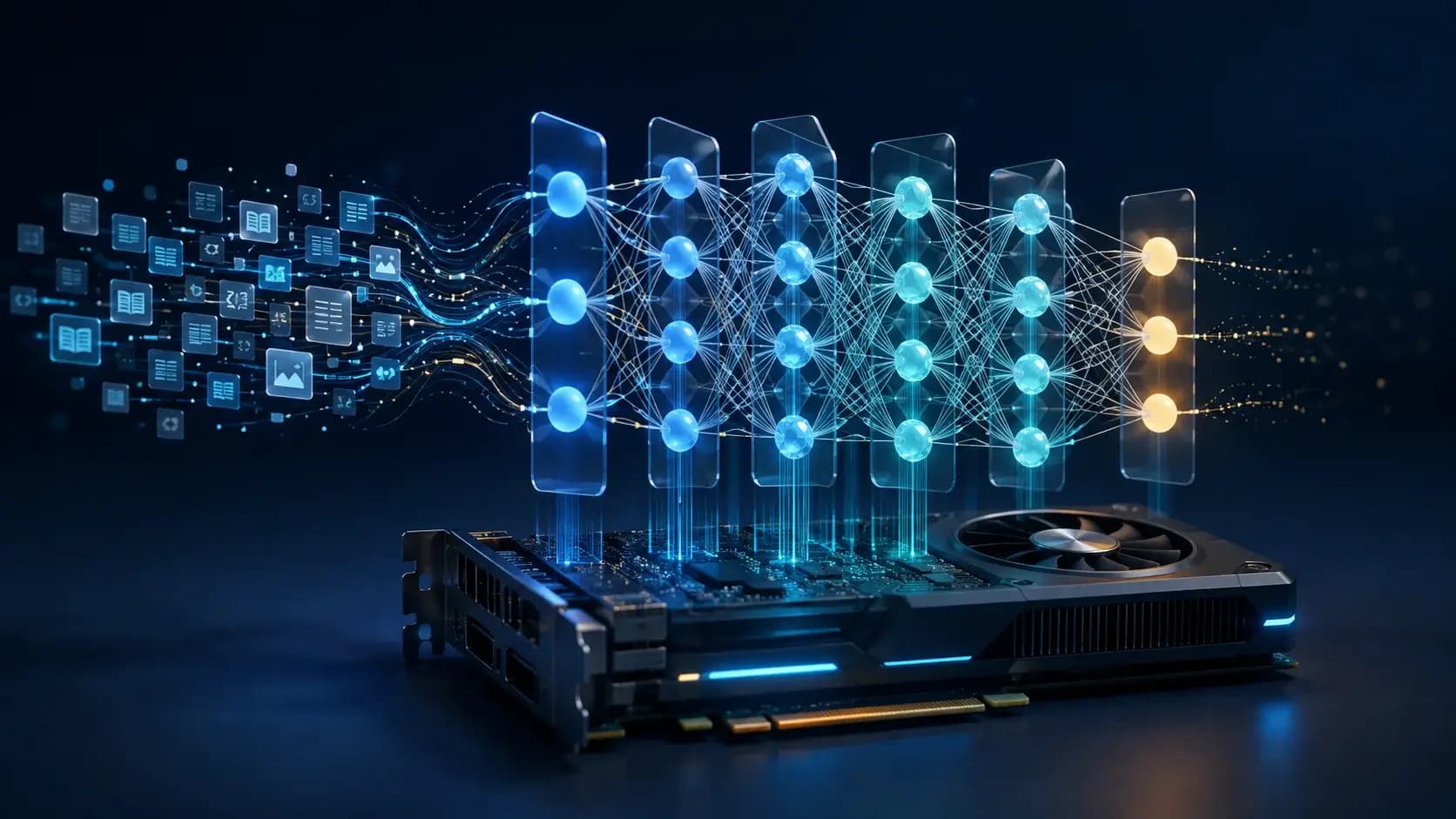

Qué aprenderás
- Design an experiment lineage manifest
- Build fixture-driven training and serving milestones
- Publish accessible evidence and governance gates
Antes de empezar
- Basic Git and command-line usage
- Comfort reading a project README
You can explain the project, run its documented first step, and decide what to verify before adopting it.
Conclusiones clave
- A versioned experiment manifest can connect every stage to evidence.
- Small fixtures make tokenizer, training, resume, API, and tool behavior reviewable.
- Interactive visuals should supplement accessible manifests and local SVG evidence.
The next step is reproducibility
Cada experimento conserva commit, entorno, tokenizer, datos/licencia/hash, seed, etapa, parent checkpoint, hardware, métricas y evaluación. Fixtures pequeños validan batch, resume, API y tools; el dashboard usa texto y SVG local como base, con Three.js solo como mejora opcional.
Treat future ideas such as additional model variants, datasets, evaluation tasks, or agentic training as proposals until a pinned implementation and measurement exist. The project below builds the evidence layer first.
Design the learning lab
Create a manifest for each run containing repository commit, environment lock, tokenizer/template hash, dataset license and hash, seed, stage, parent checkpoint, hardware, command, metrics, checkpoint checksum, evaluation card, and reviewer decision. Store large artifacts outside Git but keep immutable references in the manifest.
Add small public fixtures for tokenizer coverage, one training batch, checkpoint save/resume, OpenAI-compatible response shape, and tool-call policy. The fixtures make source changes reviewable without downloading a full corpus or running an expensive job.
Build it in bounded milestones
Milestone one records pretraining and SFT receipts for tiny synthetic/public data. Milestone two compares full SFT and LoRA under the same evaluation. Milestone three adds a post-training stage only after baseline quality and safety are stable. Milestone four serves the approved checkpoint locally with latency, retention, and rollback controls.
Expose an experiment dashboard generated from manifests: lineage graph, loss and resource curves, benchmark configuration, qualitative examples, known limitations, and cost per accepted checkpoint. Use local SVG charts for static articles and an optional Three.js graph only when it improves navigation; keep the manifest accessible as text for SEO, GEO, and assistive technology.
Govern contributions and release
Require every experiment claim to link to a receipt and fixture. Start in report-only mode, then make missing hashes or evaluations advisory, and only enforce gates after contributors can reproduce them. Redact prompts or data where policy requires it, but never replace missing evidence with a confident claim.
Success means a learner can reproduce a small run, explain every transformation, compare stages fairly, and restore a known-good checkpoint. That outcome turns MiniMind from a sequence of scripts into a durable teaching and research system.
Cómo elegir
| Criterio | Opción A | Opción B |
|---|---|---|
| Best when | You need predictable behavior and easy auditing | You need adaptive optimization and have reliable telemetry |
| Main risk | May leave performance on the table | Can become difficult to explain or debug |
Pasos de implementación
- 1
Define the run manifest and artifact/checkpoint lineage schema.
- 2
Add tiny tokenizer, batch, resume, API, and tool-policy fixtures.
- 3
Compare SFT/LoRA/post-training in bounded milestones with one evaluation card.
- 4
Generate an accessible dashboard and enforce evidence gates gradually.
Ejemplo para copiar
run:
  commit: <sha>
  stage: sft
  parent_checkpoint: <sha256>
  data: { license: <id>, sha256: <sha256> }
  tokenizer: <sha256>
  seed: 42
  evaluation_card: evals/run-001.json
  approved_checkpoint: <sha256>
Preguntas frecuentes
Should the lab store large checkpoints in Git?
No. Store immutable hashes, metadata, and controlled artifact references in Git; keep large files in an appropriate artifact store.
Is Three.js required?
No. Use it only for a helpful lineage explorer, with text tables and local SVG fallbacks for accessibility and indexing.
Fuentes
- MiniMind README (captured 2026-08-31)Fuente verificada 2026-08-31
- MiniMind repositoryFuente verificada 2026-08-31