
WandEnhancer
WandEnhancer: seguridad y operaciones de patch, scripts y control LAN
Proveniencia de artefactos, cambios locales, privilegios del renderer, exposición del panel, firewall y recuperación.
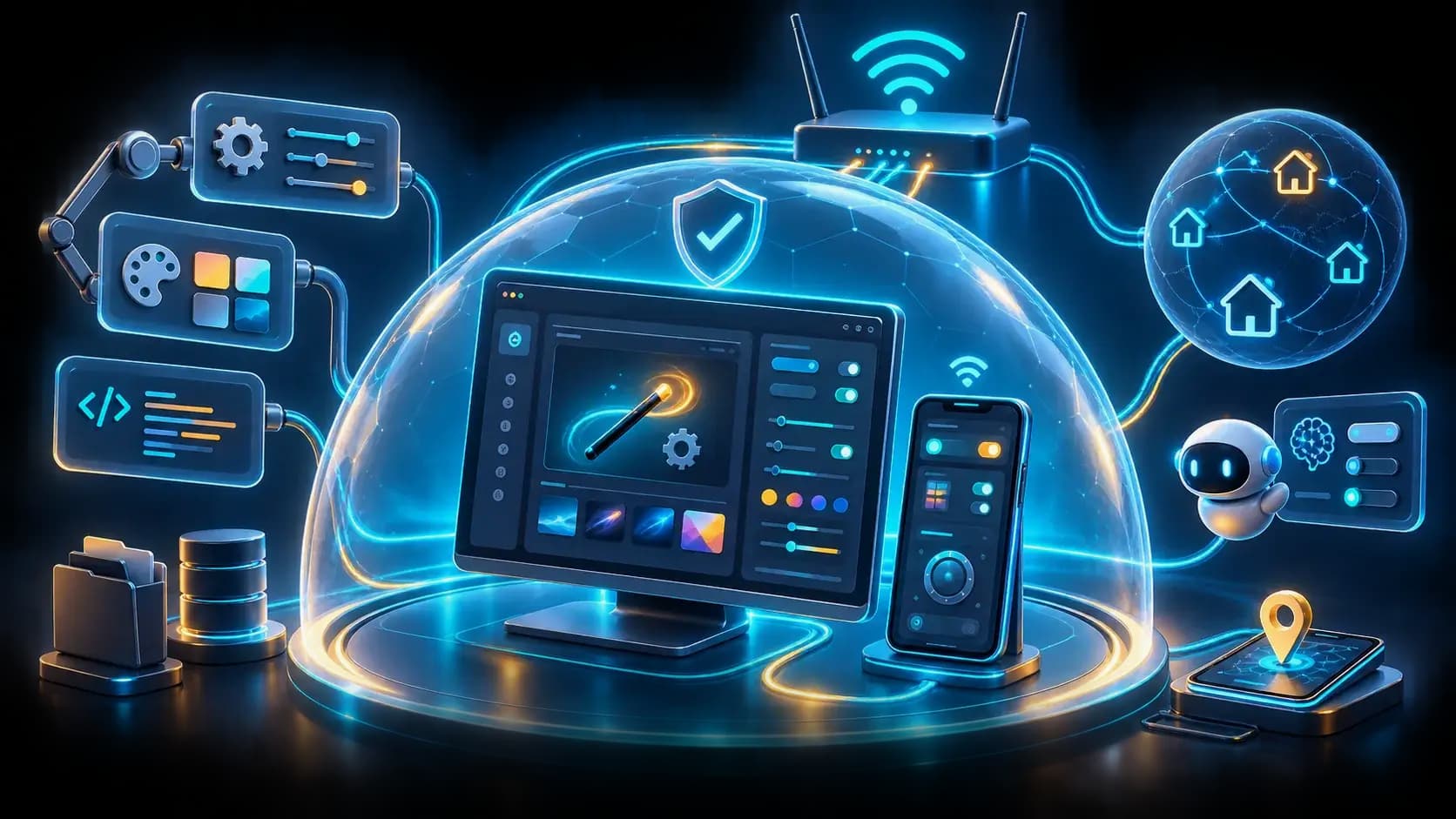

Qué aprenderás
- Verify artifact and patch provenance
- Threat-model renderer and panel privileges
- Design containment and clean restoration
Antes de empezar
- Basic Git and command-line usage
- Comfort reading a project README
You can explain the project, run its documented first step, and decide what to verify before adopting it.
Conclusiones clave
- Build and verify artifacts from a controlled fork; avoid third-party executables.
- Back up and hash every local patch surface and fail closed on unexpected paths.
- Treat renderer scripts and port 3223 as privileged, unpaired control surfaces.
Establish artifact provenance
Construye desde un fork revisado y evita ejecutables de terceros; respalda y hashea cada cambio local, trata scripts como código privilegiado y limita el panel HTTP 3223 a LAN/VPN confiable sin port-forwarding. Una respuesta completa detiene, restaura, rota solo credenciales afectadas y verifica la limpieza.
Unsigned patchers can trigger generic antivirus heuristics. Investigate the file and source path, but do not disable endpoint protection broadly just to make a build run; use a disposable machine or approved allow-list process instead.
Constrain local patch effects
The patcher modifies a selected Wand installation and may write `version.dll`, change an Electron integrity fuse, or bundle renderer scripts. Require an explicit path, verify it belongs to the intended client, back up original files, and show a complete diff or hash list before applying. Reject partial or unexpected paths and fail closed when a restore copy is missing.
Keep the patcher's privileges narrow and separate build dependencies from runtime access. A workflow that builds an artifact should not receive production secrets, and the runtime should not inherit credentials unrelated to Wand.
Treat renderer scripts and the panel as privileged
Injected scripts run in Wand's renderer with DOM access and Node `require`, and may execute more than once. Review every script, prohibit secret collection or unexpected egress, guard initialization, and log only redacted diagnostics. Remove scripts that are not needed for the current client version.
The Remote Web Panel uses plain HTTP on port 3223 without a pairing code. Bind and firewall it to a trusted LAN or VPN, monitor connections, and never expose it through port forwarding. Anyone who reaches the port can control the active trainer, even though the protocol omits the bearer token and installation path.
Operate and recover
Monitor unexpected file changes, panel connections, renderer errors, process lifetime, and client updates. If compromise is suspected, stop the panel, disconnect the client, preserve redacted hashes and workflow metadata, revoke affected credentials, restore the clean client, and rebuild from a reviewed revision.
After recovery, add a fixture for the triggering boundary and verify that uninstall removes DLLs, scripts, firewall rules, panel processes, and temporary artifacts. Security is complete only when the operator can prove both containment and clean restoration.
Cómo elegir
| Criterio | Opción A | Opción B |
|---|---|---|
| Best when | You need predictable behavior and easy auditing | You need adaptive optimization and have reliable telemetry |
| Main risk | May leave performance on the table | Can become difficult to explain or debug |
Pasos de implementación
- 1
Establish fork, workflow, scan, and source-to-artifact provenance.
- 2
Scope path, privileges, backups, hashes, and restore before patching.
- 3
Review scripts and restrict panel bind/firewall to a trusted LAN/VPN.
- 4
Rehearse stop, restore, credential response, cleanup, and regression fixtures.
Ejemplo para copiar
wand_security:
  artifact: reviewed_fork_workflow
  install_path: explicit_and_backed_up
  renderer_scripts: allow_listed
  panel_port: 3223
  panel_scope: trusted_lan_or_vpn
  internet_exposure: false
  uninstall_test: required
Preguntas frecuentes
Should antivirus be disabled for WandEnhancer?
No. Investigate heuristic alerts and use an approved, isolated workflow; do not broadly disable endpoint protection.
Does omitting the bearer token make the panel safe?
No. The panel still has no pairing code and anyone reaching port 3223 can control the trainer; restrict network reachability.
Fuentes
- WandEnhancer README (captured 2026-08-31)Fuente verificada 2026-08-31
- WandEnhancer repositoryFuente verificada 2026-08-31