
skills
skills: Overview for Developers
A source-backed skills guide focused on what it is, who it serves, and the smallest useful mental model, with reproducible checks and explicit limits.

What you will learn
- Explain the project in plain language
- Run a minimal reproducible example
- Identify production risks and extension points
Before you start
- Basic Git and command-line usage
You can explain skills, reproduce its documented first path, and make a justified adoption decision.
Key takeaways
- skills should be evaluated from a pinned revision and a small, observable fixture.
- The README describes capabilities; deployment, security, and cost decisions still require local evidence.
- Keep outputs, versions, and review decisions together so the workflow remains reproducible.
Answer first
skills is Public repository for Agent Skills This series treats it as a system to understand and test, not as a promise that a README headline applies to every environment. For this snapshot, the primary evidence is the skills repository and its captured README (https://github.com/anthropics/skills); verify the exact commit and license before production use.
For this snapshot, the primary evidence is the skills repository and its captured README (https://github.com/anthropics/skills); verify the exact commit and license before production use. For the overview article, checkpoint 1 is to preserve the input, observed output, and unresolved questions so the next reader can verify the same claim.
Who benefits
The best audience is a developer deciding whether skills matches a real workflow. The stated implementation language is Python, so the useful first question is which runtime, data, credentials, and operating-system assumptions are hidden behind the demo.
For this snapshot, the primary evidence is the skills repository and its captured README (https://github.com/anthropics/skills); verify the exact commit and license before production use. For the overview article, checkpoint 2 is to preserve the input, observed output, and unresolved questions so the next reader can verify the same claim.
A small mental model
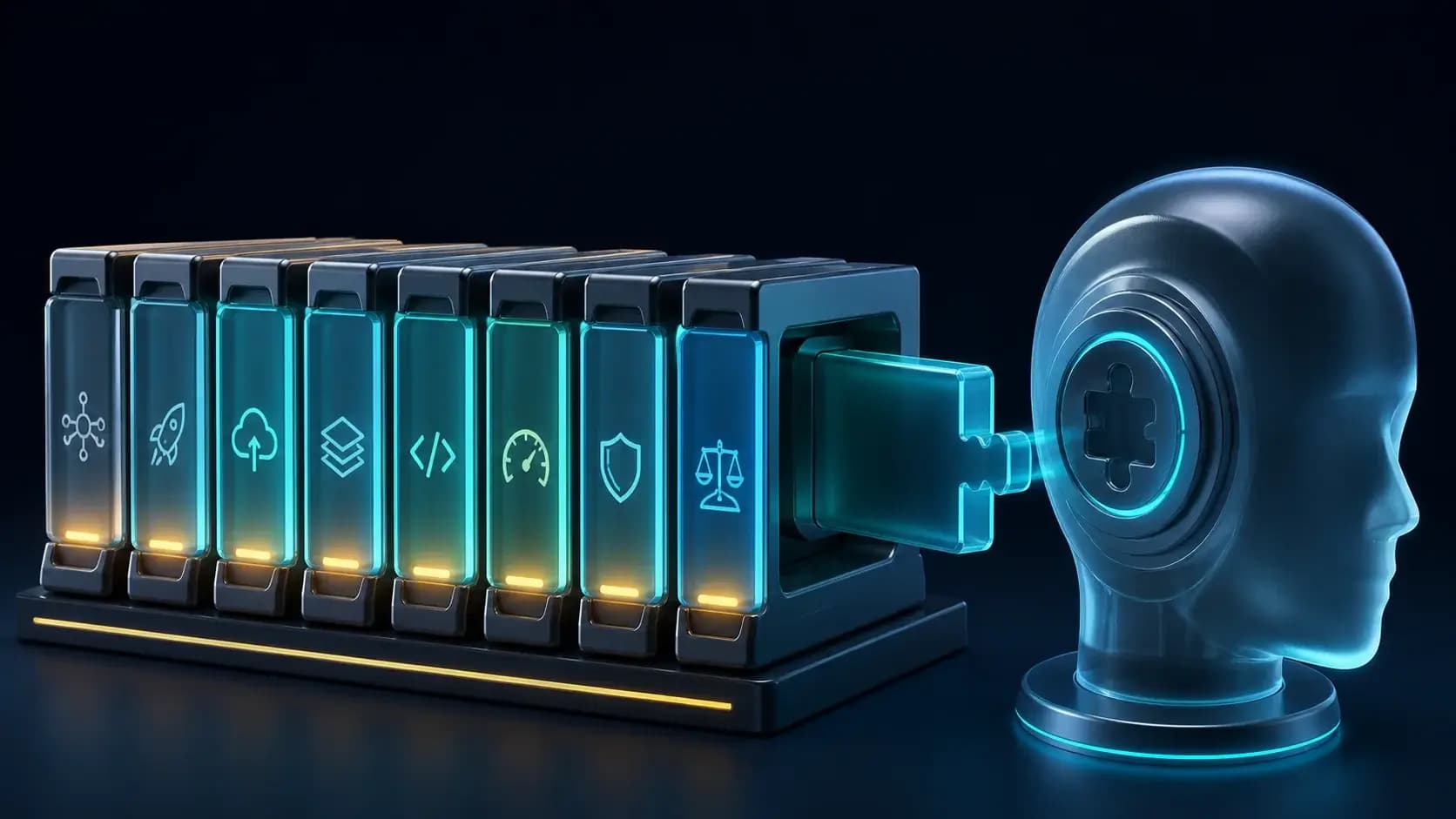
Read the project as an input boundary, a core transformation, and an output or integration boundary. The captured README says: > **Note:** This repository contains Anthropic's implementation of skills for Claude. For information about the Agent Skills standard, see [agentskills.io](http://agentskills.io). # Skills Skills are folders of instructions, scripts, and resources that Claude loads dynamically to improve performance on specialized tasks. Skills teach Claude how to complete specific tasks in a repeatable way, whether that's creating documents with your company's brand guidelines, analyzing data using your organization's specific workflows, or automating personal tasks. For more information, check out: # About This Repository This repository contains skills that demonstrate what's possible with Claude's skills Headings in the captured README include Skills, About This Repository, Disclaimer, Skill Sets, Try in Claude Code, Claude.ai, and the API, Claude Code, Claude.ai, Claude API.
For this snapshot, the primary evidence is the skills repository and its captured README (https://github.com/anthropics/skills); verify the exact commit and license before production use. For the overview article, checkpoint 3 is to preserve the input, observed output, and unresolved questions so the next reader can verify the same claim.
Decision checkpoint
Adopt skills when its documented behavior, maintenance activity, and license fit your constraints. Keep a pinned revision, a reproducible fixture, and a human owner for upgrades so popularity never substitutes for evidence.
For this snapshot, the primary evidence is the skills repository and its captured README (https://github.com/anthropics/skills); verify the exact commit and license before production use. For the overview article, checkpoint 4 is to preserve the input, observed output, and unresolved questions so the next reader can verify the same claim.
Decision guide
| Criterion | Option A | Option B |
|---|---|---|
| Best when | You need predictable behavior and easy auditing | You need adaptive optimization and have reliable telemetry |
| Main risk | May leave performance on the table | Can become difficult to explain or debug |
Implementation steps
- 1
Pin skills at a reviewed commit and record the runtime and license.
- 2
Run the smallest documented path with a synthetic or non-sensitive input.
- 3
Capture logs, output, timing, resource use, and the first failure without secrets.
- 4
Review the result, document a rollback, and only then add integrations or real data.
Copy-ready example
Create an isolated Python environment, install the pinned requirements, and run the smallest documented example.
# Pin the revision and keep the first run reproducible
git rev-parse HEAD
Frequently asked questions
What is the safest first use of skills?
Use a bounded, synthetic fixture with network and write access disabled where possible, then compare the output with the documented contract.
Can the README alone prove production readiness?
No. It is primary capability evidence, while reproducibility, security, performance, and operational readiness must be verified in the environment you control.
Sources
- skills repositorySource checked 2026-09-04
- skills README (captured 2026-09-04)Source checked 2026-09-04