
WandEnhancer
WandEnhancer Deployment: Build Your Own Artifact and Keep a Trusted Rollback
A security-first WandEnhancer deployment guide covering forked GitHub Actions builds, local patch scope, LAN panel exposure, custom scripts, and recovery.
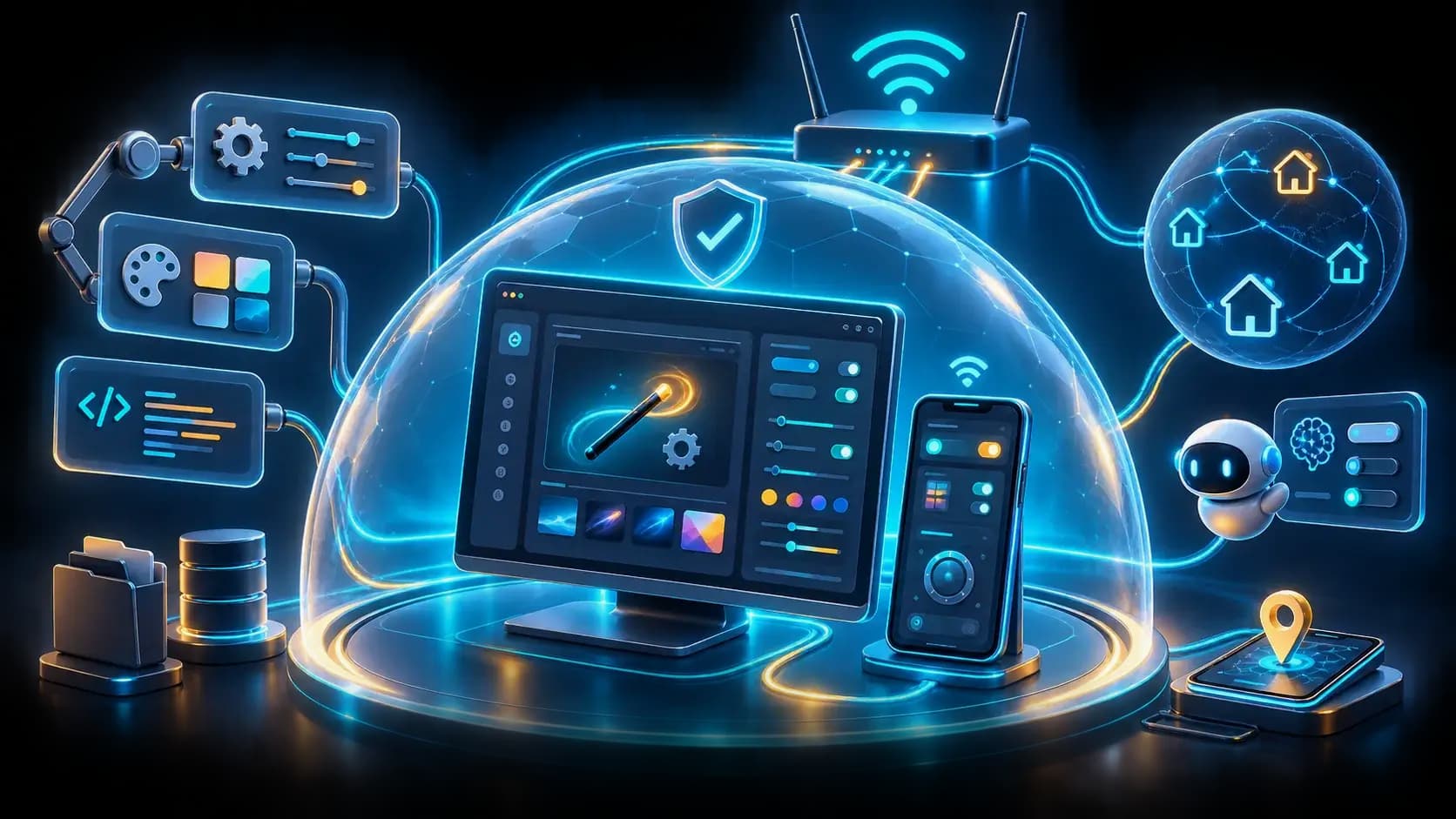

What you will learn
- Build and verify a forked WandEnhancer artifact
- Stage a reversible local patch
- Operate panel and renderer scripts within a trust boundary
Before you start
- Basic Git and command-line usage
- Comfort reading a project README
You can explain the project, run its documented first step, and decide what to verify before adopting it.
Key takeaways
- Build from a controlled fork because official prebuilt executables are not published.
- Patch a backed-up client and separate local file changes from online Wand behavior.
- Treat the HTTP panel and renderer scripts as privileged surfaces with explicit rollback.
Use the project's actual distribution model
WandEnhancer does not publish official prebuilt executables. The README directs users to fork the repository, sync the fork, run the Build executable workflow, download the artifact, and execute the resulting `WandEnhancer.exe`. Treat that workflow as part of the supply chain: pin the commit, inspect the workflow and dependencies, and keep the artifact tied to the run that produced it.
Avoid third-party videos, random mirrors, or archives that claim to be official. The project explicitly warns about malware and password stealers distributed under its name; an unsigned patcher should be built and scanned from a fork you control.
Stage the local patch
Test on a disposable or backed-up Wand installation. The .NET patcher modifies files in the selected local installation, and the bundled `version.dll` proxy changes an Electron ASAR-integrity fuse byte inside Wand's own process. Record the original installation path, file hashes, patch options, and a clean restore method before applying changes.
Separate the patcher's local file changes from Wand's normal online behavior and from build-tool dependency downloads. A successful executable build does not prove that a particular client version is compatible; verify the selected version and keep a known-good client copy for rollback.
Operate the Remote Web Panel safely
The optional panel starts a plain HTTP server on TCP port 3223 and is intended for a trusted LAN or VPN. Pairing uses a QR code, but the README states there is no pairing code: anyone who can reach the port can view the panel and control the active trainer. Keep the network profile private, restrict firewall scope, and never expose the port directly to the internet.
If a phone cannot connect, check same-network reachability, client isolation, and Windows Firewall before changing the patch. For remote access, use a VPN such as Tailscale rather than port forwarding, and inspect which API/CDN data the panel requests.
Add scripts with an uninstall plan
Custom JavaScript files run inside Wand's renderer with DOM access and Node `require`, using the same privileges as the client. Only inject scripts you understand, guard one-time work because scripts may run more than once per launch, and keep the source beside the patch artifact for audit.
Before an upgrade, export your renderer-scripts inventory and test that removing the patch restores the client without stale DLLs, scripts, firewall rules, or panel processes. A deployment is complete only when the operator can explain every modified surface and reverse it.
Decision guide
| Criterion | Option A | Option B |
|---|---|---|
| Best when | You need predictable behavior and easy auditing | You need adaptive optimization and have reliable telemetry |
| Main risk | May leave performance on the table | Can become difficult to explain or debug |
Implementation steps
- 1
Fork, sync, inspect, and run the Build executable workflow.
- 2
Hash and back up the target Wand installation before patching.
- 3
Use the panel only on a trusted LAN/VPN with scoped firewall rules.
- 4
Inventory scripts and modified files, then verify clean uninstall and restore.
Copy-ready example
fork -> sync -> inspect workflow -> Build executable
artifact + commit + workflow run ID
backup Wand install -> patch -> test panel/scripts -> restore test
Frequently asked questions
Where should I download WandEnhancer.exe?
Build it from your own fork using the documented GitHub Actions workflow; the README warns that third-party downloads are not official.
Is port 3223 safe to expose publicly?
No. The panel uses plain HTTP without a pairing code, so keep it on a trusted LAN or VPN and never port-forward it to the internet.
Sources
- WandEnhancer README (captured 2026-08-31)Source checked 2026-08-31
- WandEnhancer repositorySource checked 2026-08-31